
Before my daughter began kindergarten last year — about two weeks beforehand, to be exact — I remember thinking, Oh, crap, is she going to know how to open her favorite Go-Go squeezie applesauces by herself at school?!?!
I ended up sitting her down to make sure she knew how to do it on her own before her first day of school, and we also went over how to open Tupperware, zip the lunch box closed, and refill her water bottle. It ended up being like a Kindergarten Preparation Boot Camp in our household! Our son will be heading off to kindergarten this year, and we will be repeating many of these same things with him.
As a parent, it’s natural to start freaking out before you send your kid off to school for the first time. You worry about if they’ll make friends, if their teacher will be nice, and if your kid will get picked on. A lot of these worries are, unfortunately, out of your control. But there are some things you can do at home in the months and weeks leading up to kindergarten that will help your child be as prepared as possible!
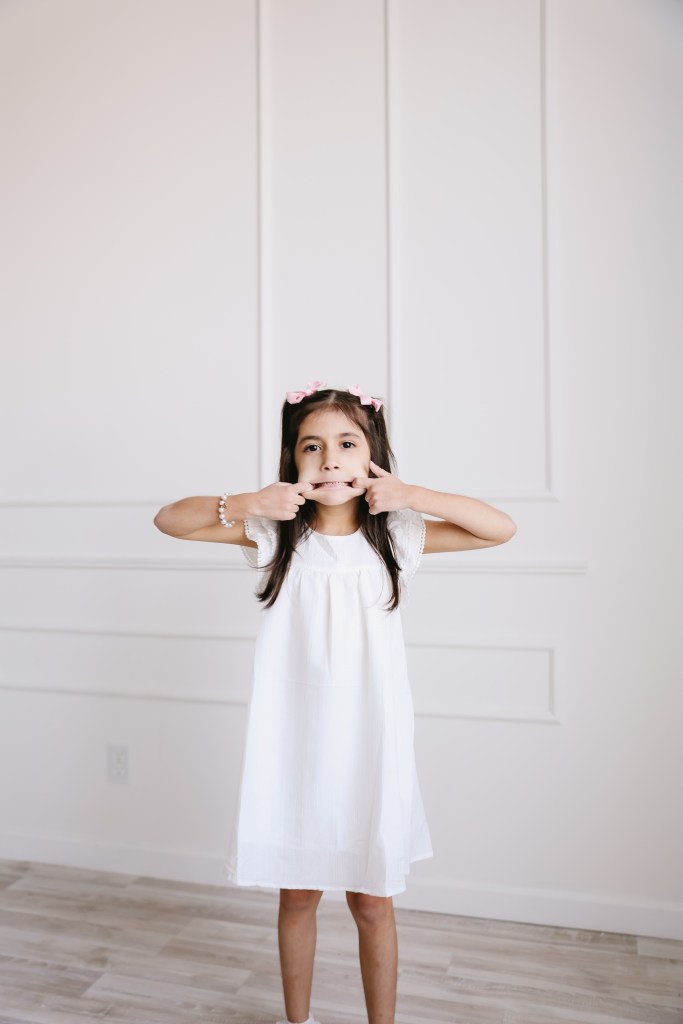
1. Have your child practice opening and closing her lunchbox, and any containers or snacks that will be inside. This one was a big one, because my daughter, bless her heart, is just a tiny little thing. I noticed that she was really struggling to open some things at home, and flat out couldn’t open things like fruit snack packages, so I sat down with her at the kitchen table to make sure she knew how to open all of her food. There were some things she couldn’t (and still can’t) do on her own, so we would either switch those out in her lunch or put the food in a container that she could open.
2. Make sure she can use the bathroom completely unassisted. I had my daughter practicing this at home for months beforehand, because I wanted to make sure that she was comfortable going to the bathroom on her own at school when I wasn’t there. I had her practice closing the door, getting on “the big girl toilet,” wiping, flushing, getting dressed again, and washing her hands. At first, she insisted that she needed my help, but I just gently reminder her that I wouldn’t be there during kindergarten, and encouraged her from where I waited just outside the bathroom. Eventually, she figured it out just fine.
3. Talk with your child about how his classmates might be different from him. I feel like this is especially important for COVID babies. Because my daughter was born in 2020 in the middle of the pandemic, we didn’t really go anywhere and weren’t apart of any playgroups. She eventually went to preschool, but I knew that kindergarten would be the most children that she had ever been around at one time. I didn’t think she would, but I didn’t want her to hear a new name or see a new hairstyle and laugh or make fun of any kid because of it. So we sat down and had a good conversation about how to treat friends, even if they are different from us. We also talked about how every family looks different, too, whether that’s a two-parent household, divorced parents and a blended family like what she was used to, living with grandparents, and more. Luckily, because my daughter is multiracial and the daughter of divorced parents, we have had plenty conversations adjacent to this before, and this was nothing new. But still, it’s good to prepare your kids for who they might encounter in their class!
4. Teach your child about consent. Nothing crazy, just the basics. Explain to her that she shouldn’t touch other kids if they say no, and if someone tries to touch her after she’s said no, to tell the teacher. Obviously, this is not the most in-depth conversation on consent that you will ever have, but it helped plant the seed with my daughter, and has made it easier to revisit the topic as things came up throughout the school year.
5. Practice getting dressed and putting on shoes. My daughter was already pretty okay at this before kindergarten, but making sure that she could independently get dressed in the morning made it easier on me as the mom. Our mornings are a flurry of taking the dog out and feeding the dog, caring for newborn twins, getting myself ready for school, and getting our three big kids ready for school. Being able to tell our elementary-school-aged kids, “Go get dressed while I make breakfast,” helped simplify our mornings immensely. Same goes for being able to say, “Go put your shoes on and then we’ll go!”
6. Make sure your child knows his parents’ names and his new teacher’s name. It was hard to imagine dropping my little four-year-old off on her first day, trusting that she would make her way to her new classroom all by herself. The idea filled me with anxiety. Would there be someone to help her? What if she got lost? And then, if she got lost, would she be able to tell an adult the information they need to help her? Although I’m sure whoever found her could figure it out regardless, I felt more comfortable that my daughter knew to say, “My mom’s name is Megan Eldredge,” or “I’m trying to find Ms. Smith’s classroom.” Eventually, I’d like her to also know my phone number, we’ll save that for another year.
7. Practice recognizing and spelling her name. My daughter went to years of preschool before starting kindergarten, so she already knew how to spell and write her name. I’m not sure if this is typical, though, so I don’t want to necessarily recommend it and then freak any parent out. Whatever your kid doesn’t know — whether that’s counting to twenty or the alphabet or how to write — she will almost certainly have learned it by the end of kindergarten, so there’s no need to stress just yet. But I do think it helps if your kid can at least recognize her name when she sees it, and knowing how to spell and write it is just an added bonus.
8. Teach him the “birthday candles” trick. Kindergarten can be very overwhelming. Since her dad and I divorced when she was barely two years old, my daughter had already been through a lot of change by the time her first day of kindergarten rolled around. We had already navigated joint custody, switching homes every few days, and being separated from me or her dad. Whenever she struggled with the big emotions that came with all of the transitions, I taught her to take in a big breath and then slowly, as if she was blowing out birthday candles. Doing this helped her to calm down, breathe, and have a moment to find the words to express how she was feeling. I explained to her that she can do the birthday candles trick at school anytime she feels angry or overwhelmed, and then she can find a teacher to help her. This will look different for every kid, but talking to him about how to handle big feelings before kindergarten can go a long way.
9. Get her used to disappointment, and how to respond to it. Once she’s in kindergarten, their days will run according to their teacher’s schedule, and chances are that there will be times your child is asked to do something he doesn’t want to do, or he won’t be allowed to do something that he would like. He will have to share, follow instructions, and sometimes stop playing when he’d really rather not — all things that will flow differently at school than they likely do at home. To help ease this adjustment, simulate these challenges at home for your kid. If you tell him no, hold him to it, and walk him through how to handle the feelings of disappointment. If he wants something, but it’s really not a good time, explain to him why that is, and compare it to what kindergarten will be like. I’m a firm believer that kids should hear the word “no” — I know some parents don’t agree with this— but even so, there are plenty of ways to prepare your child for this before kindergarten starts.
10. Soak up the last few weeks before kindergarten starts. Make note of the silly way they pronounce “spaghetti.” Save some of their art they make at home. If they can already write their name, clip it off a piece of paper and tuck it away for safekeeping. Read to them, snuggle them, make them feel extra loved. The kid you drop off for the first day of kindergarten won’t be the same as the kid that comes home on the last day of school. It is beautiful and heart-wrenching all at once. The last few weeks, just try and bask in their childlike wonder and innocence.
Well, that’s all I have, friends. Take a moment to celebrate. Celebrate yourself for all of the hard work you’ve put in the past five or so years: the sleepless nights, the teething, the baby-led weaning, the potty-training, the walking and the running. You have loved your child fiercely and unconditionally, and I have no doubt that because of that love, your child will be completely okay.
And so will you.

