It was the best of times (newborn snuggles!), it was the worst of times (postpartum rage!)
Today I’m going to tell the story of two different moms.
The first mom is three months postpartum after having her first child: a little girl with a head full of dark hair and the cutest arm rolls.
Everyone had told this mom while she was pregnant that these would be the best days of her life. That she needed to treasure every moment, because time flies and babies don’t keep. That the days were long but the years were short. That she could let them know anytime she needed help. And then, when the baby was born, they vanished.
She didn’t know what they were talking about, but these were not turning out to be the best days. Her doctor had warned her she might be sad after childbirth, maybe even depressed. But no one had warned her that the sound of her baby’s cries for hours on end would make her want to chuck her hand-me-down dinner plates off of the apartment balcony just to watch them shatter on the pavement below. Or that after a few weeks, the apartment would begin to feel like a jail cell.
No, this mom wasn’t sad at all. Instead, she was mad. Where was all this “help” she had been promised? How come nothing she did soothed her crying baby? Why did her baby in distress put her in distress? What type of monster was she, to be mad at a baby for crying?
Every day began to feel like Groundhog Day, and timers became her best friend. Baby won’t go down for her nap and mom began to get sweaty palms and panic? Ten minute timer to hide in the bathroom and cry. Baby keeps crying even though she’s been fed and changed and swaddled and rocked? Ten minute timer to hide in the bathroom and cry. Mom has to go soothe baby back to sleep for the fourth time in one hour after mom has been awake for what feels like days? Ten minute timer to hide in the bathroom and cry.
There was no one to talk to. No one to call. No one coming to save her. Simple tasks like cooking meals and taking showers and going to the grocery store alone with just the baby felt impossible, so they usually just didn’t happen. Sometimes she would make the forty-five minute drive to her mom’s, during which the baby would scream inconsolably, making this mom want to do the same. She would arrive to her mom’s in tears, embarrassed that her inadequacy as a mother was now so painfully obvious. And then when baby would start crying again, this mom would leave in tears, too, because she didn’t want her baby to disturb anyone.
The truth is, this baby did not really cry more than any other baby. And this baby’s cries did not bother anyone else near as much as they set off her own mother. It was simply that this mom felt like every cry she couldn’t immediately hush must be a failure on her as a parent. The cries made her want to run away and escape, and that feeling made the mom feel even more guilty. She swore that she would never have more children. After all, if she couldn’t even handle one baby, how would she ever survive more?
The second mom has a sleeping baby strapped to her chest. She’s in the kitchen, trying to finish a casserole to get in the over for dinner, while her kindergartner watches her every move like a hawk, questioning every move her mother makes. The preschooler is chasing the dog in circles around the house — or maybe the dog is chasing him — and this mom doesn’t care because at least it makes up for the fact that the dog didn’t get walked that day. Her husband is in the other room with the second grader, going through all of her spelling for the third time that week. The other baby was asleep on the couch, though by her grunting and growling, the mom is preparing for her to wake any moment.
“What’s for dinner?” the kindergartner asks, again. As if she didn’t ask five mintutes ago. As if she can’t see what her mom is making right in front of her.
“Something you won’t like.” the mom quipped back.
Because it was true. The kindergartner, despite all her great qualities, was a notoriously picky eater. Dinner time used to infuriate this mom as she tried to remain level-headed through a barrage of questions ranging from, “How many more bites?” to “I don’t like this anymore,” to “Can I be done yet?” Eventually, the mom set a rule that there were no questions allowed at the dinner table. However, she made the mistake of announcing this new rule during breakfast, so her daughter responded that it wasn’t a dinner table, it was a breakfast table, and what’s for dinner?
This mom’s day typically began around five o’clock in the morning. If she was lucky, she had enough time to take a shower that included washing her hair, but if she woke up late, the hair went in a clip and simply rinsing off under steaming hot water would have to do.
Her husband handled every single nighttime feeding sessions for the babies by himself. All the mom was responsible for was pumping, which still had to happen every three hours, straight through the night. They both woke up exhausted. They had an agreement that at 6:45am, the husband would “clock out” from night time duties, and the mom would take over for the day shift. The mom tried to use the last of her time before 6:45am to pack school lunches, start laundry, run the bottle washer, take the dog out, and eat breakfast without needing to reheat it.
At 6:45am, she takes over the babies while her husband rushes to eat breakfast and load up the cars with backpacks and get ready for work. By 7:20am, everybody is out the door and the day has begun. And after kindergarten drop off, the mom returns home to an empty house. Just her and the babies, alone, until mid-afternoon.
Sometimes the babies cry simultaneously. Sometimes it’s more screaming than crying. Oftentimes, the mom will have to accept the crying and take ten minutes to eat, go to the bathroom, shower, or pump. Sometimes she cries with them. But through it all, she remains mostly calm, talking aloud in a sing-song voice as if the babies can understand her, finding a quiet place to reset if she needs to. Every time that you haven’t done anything today!!! feeling creeps in, she looks around at the mostly clean house and the babies that are alive and well, and reminds herself that she’s doing more than enough.
As you’ve probably figured out by now, I am both moms.
The first mom is me when I became a mother for the first time, nearly six years ago, and the second mom is me today.
The mom I used to be struggled with postpartum mental health issues so bad that it took years of therapy and medication to return to anything that resembled “normal.”
The mom I am today is doing a whole lot better. Not perfect by any means, but better.
So what’s the difference? What happened?
When I reflect back on the mom I was the first time around, I feel a mix of sadness and guilt. I feel so bad for that version of myself that had so little support but also didn’t know how to ask for help — or simply refused to admit she neededhelp. That version of me thought that I must be inherently flawed and not cut out for motherhood, because I had no idea it would be that flipping hard. Because no one around me seemed to struggle the way I did, I kept it to myself, and then beat myself up daily. It hurts to remember how truly isolating that phase of my life was, even if it was partially self-inflicted, and a part of me to this day feels guilty that I couldn’t show up better for my daughter.
But despite my perceived shortcomings and any guilt I feel, my daughter still turned out perfectly fine, so all is well that ends well.
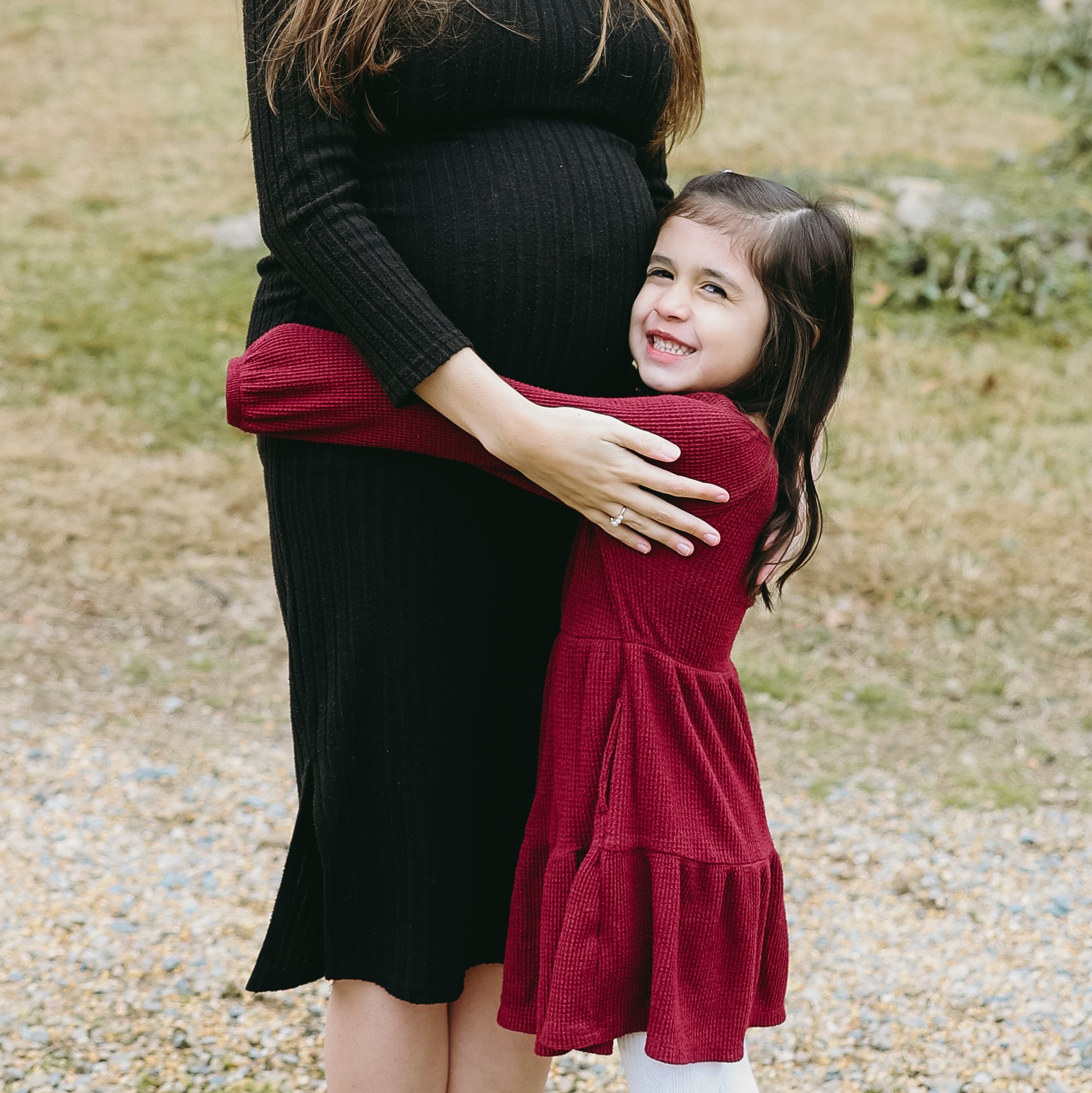
I also became a mom during 2020, so the loneliness I felt was intensified by the global pandemic. No one was allowed at the hospital except for my then-husband. The anxiety I felt about my daughter getting sick as a first time mom was even worse than it probably would have been. I avoided public places for a long time and as a result, didn’t see a whole lot of people. The only freezer meals or dinners I had were ones I prepared myself while I was pregnant, and a few from my mom. I lived 45 minutes away from most of my friends and family, and my daughter hated the car and screamed the whole time. Why is all of this relevant?
Our postpartum experience is largely shaped by the circumstances of our lives, our support systems, and factors that may be out of our control. How we cope with the fourth trimester is not just determined by our own hormonal changes and mental health, and if postpartum is especially difficult, it is never, ever your fault.
A couple of weeks after my twins were born, a friend from school reached out to see how I was doing.
“Honestly, it feels like I’m on vacation!” I replied.
And of course it did. After being a full-time student while pregnant with twins and taking care of three additional kids at home, getting to stay at home for weeks after giving birth felt so… relaxing. Once the big kids were off to school for the day, my mornings were more quiet than they’ve been in years, even with the twins at home (newborns also sleep a lot).
My husband, who normally works six days a week, was off work and completely hands-on at home, handling nighttime feeds by himself so that I could focus on pumping and recovering. My mom stopped by almost every day at first, never without something for me or the babies, or offering to help take the dog out or do dishes or hold the babies so I could rest. My mom also arranged for a cleaning service to come every other week and deep clean my house, help with laundry or bottle washing, or anything else I might need to the household running. It’s perhaps the most thoughtful postpartum gift (or just gift in general) that I’ve ever received
As I’m writing this, the meal train of friends and family bringing us dinner only just ended last week, when the twins turned one month old. It wasn’t nightly, of course, but it was several times a week, and enough to relieve so much of the stress I’ve felt as our family has been adjusting to two new additions. Knowing that dinner was taken care of allowed my husband and I to focus on still having quality time with our older kids, and it gave us a fighting chance at surviving bedtime with five kids.
I could go on forever. The point is, you simply cannot compare a postpartum experience with all of the help and support I detailed above with a postpartum experience where someone has virtually no support at all. When I talk about how quickly I recovered from birth this time around, or how surprisingly stable my mental health is (for now at least), it’s not the result of some magic. It’s not because I “tried harder.” It’s not because I’m better than anyone else, or because I’m super woman.
This postpartum phase feels lighter and more bearable because of the incredible support system around me, the years of experience of being a mom already under my belt, an improved access to resources compared to the first time around, and a deeper understanding of myself that I only gained through struggling with the postpartum phase so bad with my first.
All of this is why it’s impossible — and unhelpful, and likely unhealthy — to compare your postpartum experience with anyone else’s. If you already feel like you’re drowning, comparison will only make it worse. Instead, reach out to those around you and ask for help, and if that’s not an option, seek help from your medical provider or a therapist. Remember that you will gain something from the struggle, whether that’s being better prepared the next time around, or simply a better understanding of yourself.
Regardless, one thing is for certain: after you have created and birthed human life, you will never be quite the same again. And that is not just “okay,” it’s beautiful.
 Step by Step Parenting
We need to talk! I had 4 girls under 5 and I needed to take time out to smell the roses and not focus on the thorns! Hard for me, but we all survived. See you soon🥰
LikeLike