TW: This post discusses miscarriage, traumatic pregnancy losses, and prenatal and postpartum mental health challenges. This post discusses what it is like to be pregnant after going through loss, so if you are struggling with a recent loss, this post might not be for you.
We are over the moon to be expecting two new babies, but nothing could have prepared me for how hard pregnancy after loss would be.
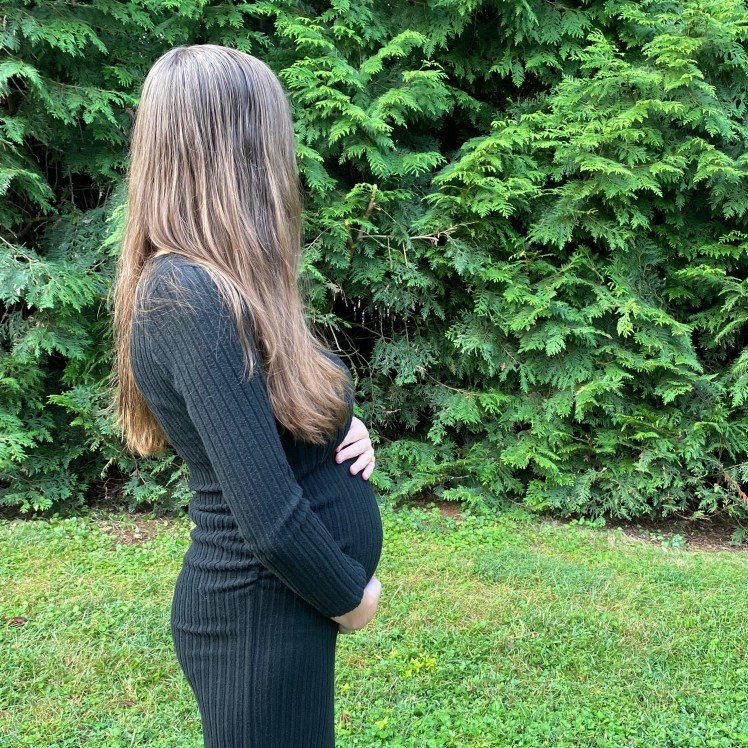
In 2021, I experienced two devastating losses, and in 2022, I got divorced. As a newly single mom of a two year old, having more kids seemed impossible. I had never wanted a large age gap between kids, and the thought of having to start over and find love again seemed a daunting task. I mourned the loss of the family I thought I would never have.
Fast forward to today, and my life looks very different. I am happily married, and I feel overjoyed to have the big family I dreamed about as a kid. The way my life has unfolded post-divorce has taught me that God truly does have a plan. I don’t believe it’s a coincidence that after years of worrying about my daughter being an only child, that my husband happens to have two kids: one who is a little older than my daughter, and one who is a little younger.
Still, we knew that we wanted to grow our family, have an “ours” baby, and get to experience all of the early stages of parenting together. We’ve survived newborn trenches a few times now, know what to expect emotionally and financially, and feel more mentally prepared to have a baby now than we did in the past. This pregnancy was planned, wanted, and prayed for. Not to mention, we are both now in a marriage where we feel completely loved, supported, heard, and cared for, so we feel a lot more confident about taking on the challenges of pregnancy and newborn life than we ever have before.
Because of all of this, I naively thought that emotionally, this pregnancy would be a walk in the park. It’s been four years since my losses, so I thought those mostly wouldn’t affect me and that I would be able to focus on the excitement of this pregnancy. Turns out I was very wrong.
I was only 3 weeks and 5 days along when I found out I was pregnant, so I knew it was still very early and a lot could go wrong. After going through a miscarriage during my previous marriage in 2021, and watching several of my loved ones go through their own losses in the years since, I was now keenly aware that those two lines on a pregnancy test do not guarantee a baby. And that thought kept me up at night.
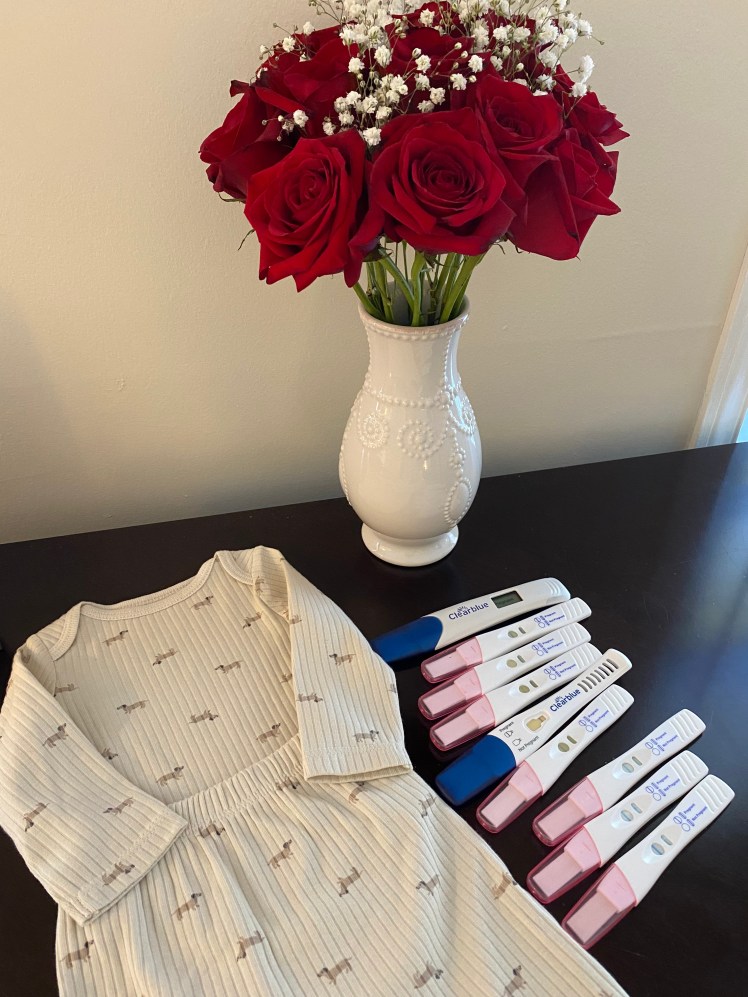
Still, that didn’t stop me from taking almost twenty pregnancy tests those first few weeks. With no symptoms, no ultrasounds, and no baby bump, it was hard to feel pregnant, and I was clinging to any proof I could get that I was, in fact, pregnant.
I knew logically that the extra tests were doing nothing. All they do is confirm you have enough hCG in your body to be pregnant, but they tell you nothing about whether it’s a viable or properly-progressing pregnancy. One concerned friend even reminded me that after her missed miscarriage, she continued to get positive pregnancy tests for weeks. But that didn’t stop me, and I continued to take one every morning like clockwork. It wasn’t until I ran out of tests and was considering buying a 50-pack from Amazon that my husband sat me down and we had a serious talk.
Instead of relying on pregnancy tests, I told myself that I would be “safe” once I made it to my first ultrasound at eight weeks, when I would get to see the baby’s heartbeat for the first time.
Then, I told myself that I would be “safe” past thirteen weeks, because that is when I would enter the second trimester, when the odds of having a miscarriage are significantly lower.
Then, I remembered stories I had seen on Instagram or Facebook, and I worried that I shouldn’t consider myself “safe” until closer to fifteen or sixteen weeks, because some people had gone in for those appointments only to see no heartbeat.
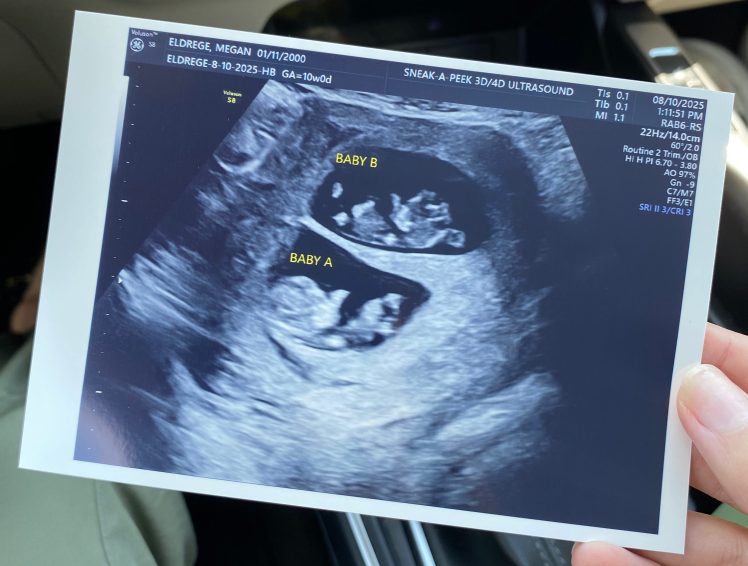
And so this went on, every week. Scans and appointments temporarily eased my anxiety about losing my babies, but then I would find some new reason to be stressed and the cycle started over again. I am lucky that I am pregnant with twins and receive far more ultrasounds than normal, but that doesn’t change the fact that no amount of tests and scans can fully alleviate the uncertainty and anxiety that tends to haunt a pregnancy after a loss.
Navigating pregnancy after loss is something that men can struggle with, too, though their pain is often not talked about as much. When I first met my husband, I noticed a tattoo that he had on his bicep and asked him what it was. He explained that it was the heartbeat of a child he and his then-wife had lost to a missed miscarriage before they had their final rainbow baby. Getting the tattoo in a particularly painful spot was his way of carrying the grief physically, where it would always be with him. It was maybe the first time I had heard a man speak so openly about the impact of pregnancy loss, and I found it both sad and touching.
Although I hate that my husband and I have both experienced the pain that comes with loss, I am grateful that my husband has navigated pregnancy after loss before. He knows what it is like to still feel grief over what was lost, while also feeling excited for new life. He knows what it is like to go through those first few months of pregnancy after loss, holding your breath, scared that the past might repeat itself. He has been beyond understanding of my anxiety and my mix of emotions. He has held my hand, literally and figuratively, as I have learned how to heal from my pregnancy loss while celebrating this pregnancy.
But still, I don’t think it’s possible to ever heal “enough” from a pregnancy loss. Even if you do all of the right things — go to therapy, journal, meditate, pray, cry, etc. — nothing can replace the loss of a child. Nothing makes up for the loss of a future that was dreamed up with onesies and strollers and diapers, only to have the future crumble beneath your feet. I once read that the mother carries fetal cells from every pregnancy, even miscarriages, in her body forever. That both provides comfort that our lost babies are always with us, but also serves as a physical testament to the lasting permanence of those losses.
Anyone who has experienced pregnancy after loss knows all too well that a rainbow baby does not fix the heartbreak. Children cannot replace children, and the grief from losing a pregnancy lives in your heart forever. But through it all, I can’t help but feel grateful when I picture my two angel babies in heaven sending me two more rainbow babies to love. This pregnancy hasn’t been what I thought it would be in many ways, but I cannot wait until I can snuggle two tiny newborns at the same time and take solace in knowing that everything worked out exactly as God intended.
 Step by Step Parenting
One thought on “Pregnancy After Loss”